
Learn sharia financial terms such as riba, akad, murabahah, and musyarakah in a practical & easy to understand way before choosing sharia financial products.
Islamic finance is no longer a niche. From savings, home financing, to vehicle loans, sharia product choices are now increasingly easy to find. But one challenge that often arises is that many people are interested, but don’t really understand the Islamic financial terms used.
In fact, understanding these terms is not just a matter of religion, but also a matter of financial clarity. With proper understanding, you can be calmer when making financial decisions, without feeling doubts or misunderstandings along the way.
Also read: Pinjol Syariah: How it Works & Submission Recommendations
Why is it important to understand Islamic financial terms from the start?
Islamic finance operates on different principles from conventional systems. The Islamic financial concept does not only focus on profits, but also:
- Transaction fairness
- Risk transparency
- Prohibition of practices that harm one party
According to Financial Services Authority (OJK)Indonesia’s sharia financial assets have continued to experience growth in recent years, driven by increasing public interest in ethical and sustainable products. This means that more and more products are available, and it is increasingly important for us to understand Islamic financial terms so we don’t make the wrong choice.

Sharia Financial Terms
1. Usury
Riba is an additional requirement required up front in a lending and borrowing transaction, without considering the results or conditions of the borrower. In the conventional system, usury is often manifested in the form of an obligation to pay fixed interest, regardless of the borrower’s financial condition.
In sharia finance, usury is prohibited because:
- Bearing the risk on only one party
- Potential to cause economic inequality
- Does not reflect the principles of justice and mutual assistance
That is why sharia products replace interest with contract schemes such as buying and selling, renting or profit sharing. Understanding the concept of usury helps us understand why the term Islamic finance feels different from its basic structure, not just from its name.
2. Contract
The contract is the main foundation of every sharia financial transaction. The contract functions as a formal agreement that explains what both parties agree to, without any “hidden rules”.
In a sharia-compliant contract, it must be clear:
- Transaction object (what is being traded or financed)
- Rights and obligations of each party
- Payment and risk sharing schemes
This transparency means that customers know from the start what they will face. So, it’s not just about signing a contract, but about clarity and a sense of security. This is why contract is one of the most crucial sharia financial terms to understand.
3. Murabaha
Murabahah is a sale and purchase agreement where the basic price and profit margin are stated openly at the beginning. Customers know exactly how much the goods cost and how much profit the financial institution takes.
In practice, murabahah is often used to:
- Sharia mortgage
- Vehicle financing
- Purchase of large value consumer goods
Because the margin has been agreed upon from the start, murabahah installments tend to be stable. That doesn’t mean it’s cheaper or more expensive, but it’s more predictive and transparent. That is the reason murabahah is one of the most popular sharia financial terms in retail financing.
Also read: Getting to know Sharia Investment: Complete Guide, Principles, Types and Tips for Getting Started
4. Mudharabah
Mudharabah is a cooperation agreement in which one party provides capital (shahibul maal), while the other party runs the business (mudharib). Profits are shared according to the agreed ratio, while financial losses are borne by the capital owner, as long as the manager is not negligent or violates the agreement.
Mudarabah is commonly used in:
- Sharia savings and deposits
- Productive business financing
This scheme encourages trust and professionalism, because both parties have the same interests: the business running healthily. This is a real example of how the term Islamic finance not only regulates profits, but also the ethics of cooperation.
5. Musharakah
Musyarakah is a form of cooperation in which all parties share capital, whether in the form of money, assets or expertise. Because everything is a “joint venture”, profits and risks are also shared proportionally according to their respective contributions.
In practice, musyarakah is often used to:
- Financing small and medium enterprises (MSMEs)
- Property development cooperation
- Phased asset ownership schemes such as musyarakah mutanaqisah on sharia mortgages
The advantage of musyarakah lies in the principle of justice, there is no party who just “collects” without taking part in the risks. This Islamic finance term emphasizes partnerships, not relationships creditor And debtor.
6. Ijarah
Ijarah is a rental agreement, where the customer pays a fee for the benefits of using the asset, not for owning it. So the focus is on utility, not ownership.
Ijarah is generally used for:
- Rent property or business building
- Financing company operational vehicles
- Rent heavy equipment or production machines
In some schemes, ijarah can be combined with an ownership option at the end of the lease term (ijarahmintaiya bittamlik). During the contract period, responsibility for ownership of the asset remains with the lessor, this is important to maintain fairness in the transaction.

7.Gharar
Gharar refers to ambiguity or uncertainty in a transaction, both in terms of object, price, delivery time and risk. An example is selling goods that don’t yet exist or have unclear specifications.
In sharia finance, gharar must be avoided because it has the potential to:
- Causing disputes in the future
- Harm to one of the parties
- Opening up space for information manipulation
That is why sharia products tend to be transparent from the start, starting from the contract, payment simulation, to the risks that may occur. This principle makes the term Islamic finance emphasize clarity rather than mere promises of profit.
8. Maysir
Maysir is an activity that contains elements of speculation or gambling, where profits are obtained without any real business process. The results really depend on the luck factor.
Examples of maysir can be found at:
- Extreme speculative transactions
- Investment scheme without underlying assets
- Financial games that don’t create real value
Sharia finance avoids maysir because it conflicts with the principles of productivity and justice. Any profits should come from clear economic activity, not just random predictions.
9. Ratio
Nisbah is the profit sharing ratio agreed upon at the beginning of the contract, usually used in mudharabah and musyarakah. For example, 60:40 or 70:30 between managers and capital owners.
What needs to be emphasized:
- The ratio applies to profits, not income
- There is no fixed nominal guarantee
- All parties understand the risks from the start
With a ratio system, Islamic finance emphasizes the principle of risk sharing, not risk transfer. This is the reason why understanding Islamic financial terms is important so that customer expectations remain realistic.
Also read: Understanding SBSB (State Sharia Securities) and how to buy it
10. Sharia Supervisory Board (DPS)
The Sharia Supervisory Board (DPS) is an independent party tasked with ensuring that all products, contracts and operations of financial institutions comply with sharia principles and DSN-MUI fatwas.
DPS roles include:
- Review and approve new products
- Supervise the implementation of the contract
- Provide recommendations for improvement if deviations occur
For customers, the presence of DPS provides an additional sense of security. This means that these sharia financial products are not only legally legal, but also comply with applicable sharia principles.

How do Sharia Finance Terms Work in the Real World?
Imagine you want to apply for a sharia mortgage. Instead of interest, banks use murabahah or musyarakah mutanaqisah contracts. If you understand Islamic financial termsyou will understand better:
- Why are installments transparent?
- How home ownership schemes work
- What are the consequences if you want faster repayment?
This is not just a technical matter, but a matter of feeling safe in the long term.
Also read: Financial Ratios: Definition, Functions and Various Types
Sharia Finance Still Needs Healthy Credit Management
Even though it is sharia-based, financial institutions still assess the financial suitability of prospective customers. This means that credit history and personal financial management still play a big role.
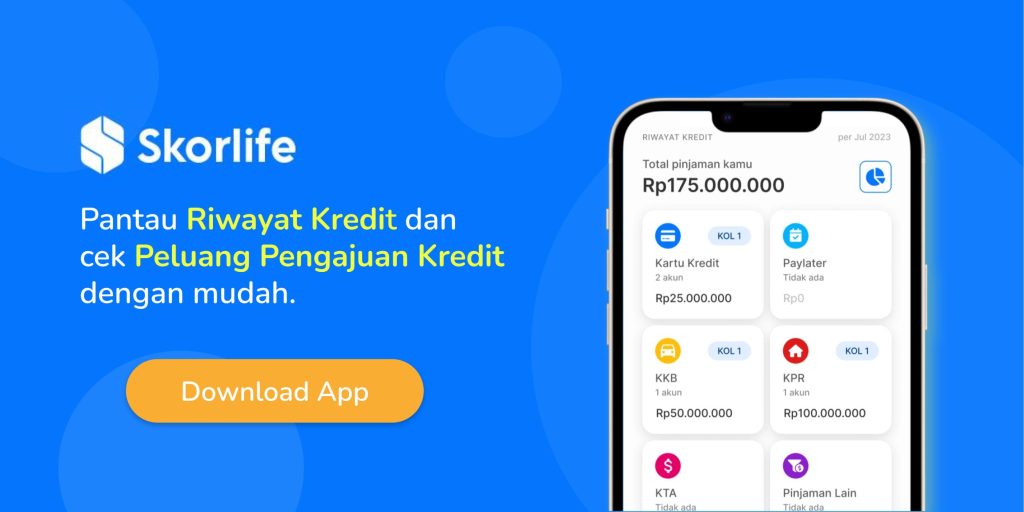
It’s here score life can be your financial partner for:
- Check Credit History to understand your current financial position
- Credit Application Opportunitiesso you know how likely your application is to be approved
- Financial managementwith recommendations for paying arrears and setting a more realistic budget
With clear data, you can be more confident when applying for a sharia mortgage, vehicle financing or other financial products.
Conclusion
Understanding sharia financial terms doesn’t mean you have to be an expert. Just know the basic concepts, then use them as provisions to make financial decisions in a more conscious and planned manner.
It doesn’t matter if you just started now. As long as you have stepped in a wiser direction, manage your finances with clear, transparent principles and according to the needs of modern life.
FAQs regarding Sharia Financial Terms
- What is meant by the term Islamic finance?
The term Islamic finance is a collection of concepts and terminology used in a financial system based on Islamic principles. This term regulates how transactions are carried out so that they are fair, transparent and free from usury, gharar and maysir.
- What is the main difference between the terms Islamic finance and conventional finance?
The difference lies in the basic principles. Sharia finance does not use interest, but rather contracts such as buying and selling, renting or profit sharing. Meanwhile, conventional finance relies on interest as the main source of profit.
- Are Islamic financial products always safer?
Not necessarily safer, however more transparent in terms of transaction structure. The risk is still there, but it is shared fairly according to the agreement. Therefore, understanding Islamic financial terms is important so that you know the risks from the start.
- Is Islamic finance only for Muslims?
No. Sharia financial products are open to anyone. Many non-Muslim customers choose sharia products because the system is clear, installments are transparent, and do not depend on fluctuating interest.
- Does credit history still have an influence on applying for sharia financing?
Yes. Even though it is sharia-based, financial institutions still consider the credit history and financial condition of prospective customers. Check credit score and managing finances well remains an important factor before filing.
News
Berita Teknologi
Berita Olahraga
Sports news
sports
Motivation
football prediction
technology
Berita Technologi
Berita Terkini
Tempat Wisata
News Flash
Football
Gaming
Game News
Gamers
Jasa Artikel
Jasa Backlink
Agen234
Agen234
Agen234
Resep
Cek Ongkir Cargo
Download Film