Scroll through Reddit threads, YouTube comments, or seller forums and you’ll see the same advice repeated over and over: “Just form a Delaware LLC for Amazon FBA.”
And it’s easy to see why that idea has traction.
Delaware is home to more than 2.1 million active business entities, and over 80% of US-based IPOs chose Delaware as their corporate home in 2024, underscoring just how dominant the state is in business formation.
But here’s the truth most people tend to overlook: a Delaware LLC is not required for Amazon FBA, and for many sellers, it’s not even the best choice.
What Amazon sellers actually care about is not hype or statistics, rather it’s about:
- Staying compliant with US tax and legal requirements
- Avoiding unnecessary taxes and fees that eat into profit
- Setting up a structure that won’t break when they scale, expand into new markets, or seek investment
This guide breaks it all down: when a Delaware LLC makes sense for Amazon FBA, when it doesn’t, the pros and cons, tax implications, and how to choose the right LLC structure with confidence.
So, if you’ve been wondering “Do I need a Delaware LLC for Amazon FBA?”, this blog is for you.
And if you’ve already decided on a state for your LLC, doola is here to help you implement it correctly: from formation to EIN, US banking, tax compliance, and beyond, so you never lose momentum because of paperwork or uncertainty.
What Is a Delaware LLC? Why Is Delaware So Popular?
A Delaware LLC is a limited liability company formed under Delaware state law. Like LLCs in other states, it shields owners from personal liability for business debts and obligations.
Why Delaware Has a Strong Business Reputation
According to the Delaware Division of Corporations, more than 1.6 million business entities are incorporated in Delaware, even though the state’s population is under 1 million.
Delaware is popular among entrepreneurs and legal advisors because it offers:
- Well-established corporate laws that have been refined over decades and are familiar to attorneys and investors nationwide.
- Flexible governance rules that make it easy to customize management structures, member rights, voting arrangements, and more.
This legal ecosystem has made Delaware the go-to state for entity formation.
Who Delaware Is Actually Built For
Delaware’s advantages are real, but they tend to compound in specific scenarios. It mainly benefits:
1. Venture-backed startups looking for investor confidence and clean cap table structures.
2. Companies planning to raise outside capital, where standardized governance and clear shareholder rights reduce friction.
3. Businesses operating across multiple states, where legal predictability can reduce multi-state risk.
4. Enterprises planning for acquisition or IPO, which benefit from Delaware’s sophisticated corporate law and well-trod due-diligence pathways.
That doesn’t automatically mean Delaware is the ideal choice for every Amazon FBA seller, especially solo or early-stage sellers focused on testing products and generating positive unit economics.
To truly understand which types of FBA sellers might benefit from Delaware, you first need to understand how Amazon FBA businesses are structured and what Amazon actually requires.
That’s what we’ll cover next.
How Amazon FBA Businesses Are Structured
Amazon doesn’t hire you. It doesn’t enter into partnerships with you.
And it certainly doesn’t evaluate sellers based on which US state their LLC is formed in. It sees every seller as an independent business using its marketplace and fulfillment infrastructure to reach customers.
What Amazon Actually Requires
Amazon does not require a Delaware LLC (or any specific state).
During seller onboarding and ongoing reviews, the platform will mainly focus on a small but critical set of compliance checks:
1. A valid business entity (LLC or corporation): Your business must be legally formed and recognized under US law, whether that’s an LLC or a corporation. The state of formation is secondary to the fact that the entity exists and is in good standing.
2. EIN (Employer Identification Number): An EIN issued by the IRS is used to identify your business for tax reporting and verification purposes. Amazon uses this to confirm that your business is properly registered at the federal level.
3. US business bank account (or an approved international alternative): Amazon requires a verified bank account to receive payouts. For non-US sellers, certain approved international or fintech banking solutions may be accepted, but the account must clearly link back to the business entity.
4. Accurate tax information (W-9 or W-8BEN-E): US sellers submit a W-9, while non-US sellers submit a W-8BEN-E. This allows Amazon to correctly report income and comply with US tax regulations.
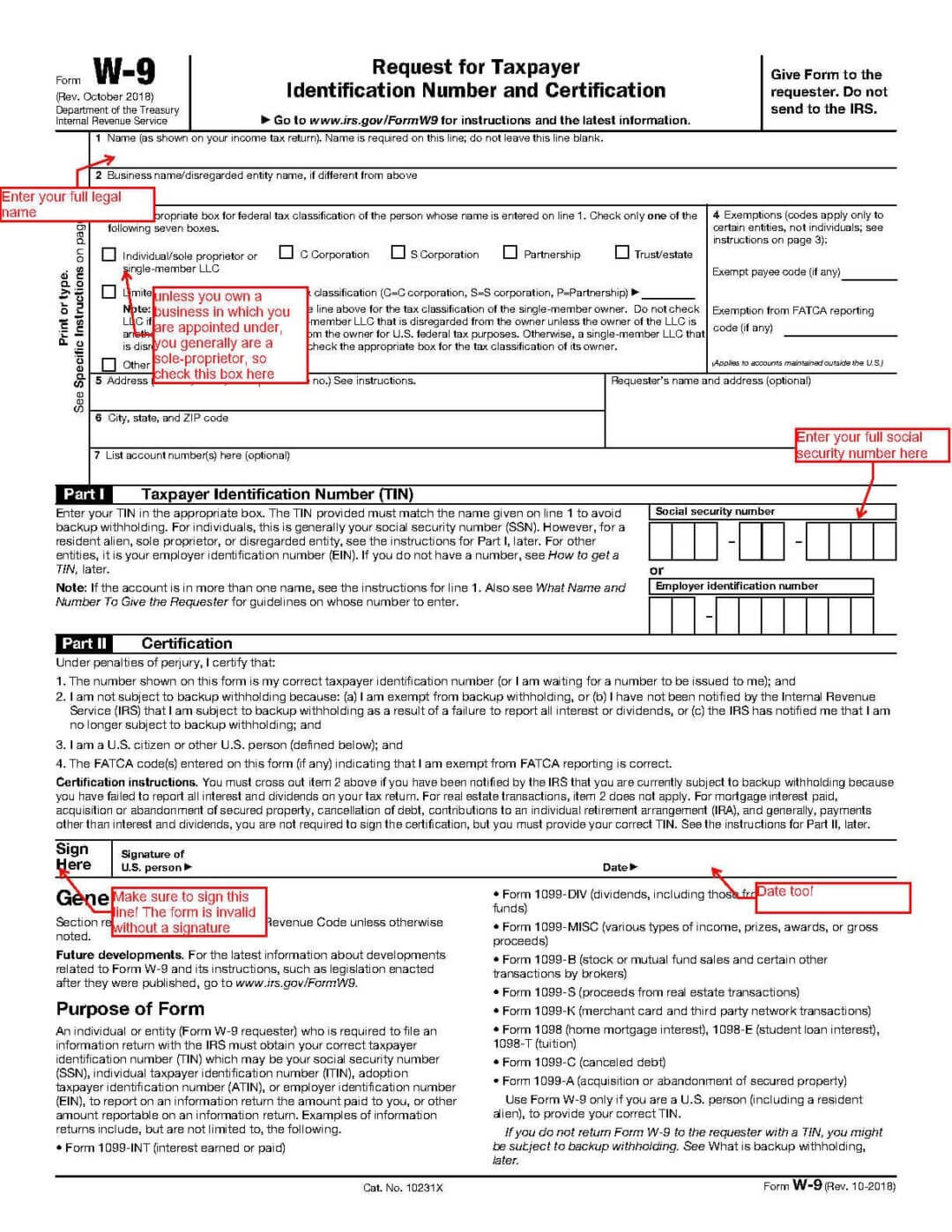
5. Identity and address verification: Amazon verifies the identity of business owners and confirms a valid address to prevent fraud and ensure marketplace integrity.
Common Amazon FBA Structures
In practice, Amazon FBA businesses tend to fall into a few well-established structural categories:
✔️ US residents forming LLCs in their home state
This is the most common and often the simplest setup, as it aligns the business with where the owner actually lives and operates, reducing compliance complexity.
✔️ Non-US founders forming US LLCs to access Amazon.com
International sellers frequently form US LLCs to sell on the US marketplace, gain access to US banking, and streamline tax reporting.
✔️ Solo sellers vs. multi-member Amazon brands
Some FBA businesses are single-owner operations, while others are co-founded brands with multiple members, shared ownership, and more formal governance.
✔️ Sellers expanding into multi-channel e-commerce
As Amazon brands grow, many expand beyond FBA into Shopify, wholesale, or direct-to-consumer channels, requiring a structure that can support broader operations.
At the end of the day, Amazon cares about compliance, not your LLC’s zip code. The right structure, therefore, is the one that keeps your business verifiable today and scalable tomorrow.
Does Amazon FBA Require a Delaware LLC?
No. Amazon does not require a Delaware LLC for Amazon FBA.
That’s the short answer, and it’s one of the most misunderstood points in the Amazon seller community. If you’ve been told otherwise, don’t worry, you’re not missing anything.
We’ll explain where the confusion comes from, what Amazon truly verifies, and how to decide what’s right for your specific situation.
What Amazon Actually Verifies
When you apply for an Amazon seller account or go through periodic reviews, Amazon focuses on operational and regulatory legitimacy, not your state of formation. Specifically, Amazon verifies:
- Business legitimacy: Amazon confirms that your business is legally formed, active, and capable of operating as an independent seller, whether that entity is an LLC or a corporation.
- Tax compliance: Your submitted tax information (W-9 for US sellers or W-8BEN-E for non-US sellers) must be accurate, complete, and consistent with IRS records.
- Banking access: Amazon checks that you have a valid, verified bank account that can legally receive business payouts and is properly linked to your entity.
- Identity verification: Seller identity, ownership details, and address information are reviewed to prevent fraud and ensure marketplace integrity.
For that matter, there is no built-in preference for Delaware over Wyoming, Texas, Florida, or your home state. Amazon treats all compliant entities the same.
“Delaware by Default” | The Most Misleading Advice for FBA Sellers
“Just form a Delaware LLC.”
It’s repeated so often on Reddit, Quora, YouTube, and seller forums that it starts to sound like a universal rule for Amazon FBA founders.
Most of this advice is just copied, recycled, and then blindly applied to Amazon sellers whose businesses don’t actually benefit from Delaware’s advantages in the first place.
You’ll now see where the confusion usually comes from.
1. Delaware is popular for investors, not marketplaces
Delaware’s reputation was built on venture capital, mergers, and complex corporate structures, not on Amazon FBA requirements or marketplace compliance.
Amazon doesn’t reward you for being “Delaware-based.”
2. “Best for startups” gets confused with “best for Amazon”
What works for a VC-backed SaaS company with a pitch deck and term sheet often adds zero value to a solo or early-stage Amazon seller shipping products from FBA warehouses.
3. Influencers tend to oversimplify LLC formation
Many guides prioritize speed, popularity, and “what everyone else is doing” over the realities of ongoing compliance, additional filings, and avoidable costs.
To be clear, a Delaware LLC can be the right move for Amazon FBA sellers who are building large, multi-member brands, planning to raise outside capital, or positioning the business for acquisition.
But for many small, solo, or location-based sellers, Delaware often introduces extra fees and compliance complexity without delivering meaningful benefits in return.
Pros of a Delaware LLC for Amazon FBA Sellers
A Delaware LLC can be the right move, in the right scenarios, and here are some of its key benefits that attract sellers:
- Strong Legal Framework: Delaware’s business courts provide predictability if disputes arise.
- Privacy Benefits: Delaware does not publicly list LLC member names.
- Scalability: A good fit if you plan to operate in multiple states, raise funding, sell or acquire brands, or build a multi-channel e-commerce company.
| Delaware LLC | Best Fit For
✔️ Large or fast-scaling Amazon FBA brands ✔️ Teams with multiple owners ✔️ Businesses planning long-term growth beyond Amazon |
Cons of a Delaware LLC for Amazon FBA Sellers
For many sellers, the following downsides of a Delaware LLC outweigh the benefits:
- Delaware Franchise Tax: You pay annual fees, even if you don’t make money.
- Registered Agent: You need to maintain a registered agent with a physical address in the state, which incurs a recurring annual expense.
- Double Compliance Risk: If you live or operate in another state, you may need a Delaware LLC and a foreign LLC registration in your home state.
Why Small Amazon Sellers Often Overpay
Delaware rarely lowers overall tax liability for small sellers, but it does introduce additional compliance obligations that wouldn’t exist in a home-state or simpler jurisdiction.
This results in more paperwork, more deadlines, and higher annual fees for several FBA sellers.
Delaware LLC vs. Other States for Amazon FBA
We’ve already covered why Delaware is popular, but the more important question is how it actually compares to the alternatives Amazon FBA sellers most commonly consider.
Delaware vs. Home-State LLC (US Residents)
Many founders form a Delaware LLC without realizing that operating from another state often creates extra compliance instead of simplifying things, so let’s break it down for them.
| Factor | Home State LLC | Delaware LLC |
| Compliance | Simple, single-state compliance | More complex if you live and operate outside Delaware |
| Cost | Lower overall (often $0–$300 annually, depending on state) | Higher: ~$300 Delaware franchise tax + ~$100–150 registered agent |
| Tax Nexus | Clear and centralized | Often duplicated across Delaware + home state |
| Best For | Most solo and small Amazon sellers | Scaling or investor-focused brands |
📌 Takeaway: If you live and operate in a US state, forming your LLC in your home state is usually the most cost-efficient and compliance-friendly choice.
Delaware vs. Wyoming LLC
This comparison matters most for non-US founders and digital-first Amazon sellers who don’t have a physical US presence.
| Factor | Wyoming | Delaware |
| Annual Fees | ~$50–$100 (annual report + agent) | ~ $300 franchise tax + ~$100–$150 agent |
| Privacy | Strong (no public owner names) | Strong (no public member disclosure) |
| Investor Appeal | Moderate | High |
| Best For | Early-stage & international sellers | VC-ready, scaling brands |
📌 Note: Wyoming is often the better choice for early-stage or cost-sensitive international Amazon sellers who want US access without unnecessary overhead.
Delaware vs. Texas / Florida
Texas and Florida are frequently overlooked despite being highly Amazon-friendly for US residents. These two states offer:
- No personal state income tax, which can materially improve take-home profits for owner-operators
- Lower compliance burden for residents, since there’s no need for foreign qualification
- A better operational fit for US-based Amazon sellers running inventory, teams, or logistics locally
So, if you live in Texas or Florida, forming your LLC there often delivers the best balance of tax efficiency, simplicity, and scalability.
Delaware rarely provides enough incremental benefit to justify the added cost unless you’re planning a major growth or investment event.
If you’re still weighing Delaware vs another state for your Amazon FBA LLC, sign up with doola and get guidance tailored to your business stage, location, and growth plans.
Best State to Form an LLC for Amazon FBA
Although this guide focuses heavily on Delaware, it would be misleading, and frankly irresponsible, to label Delaware as the best state for every Amazon FBA seller.
Where you live, how you sell, how fast you’re scaling, and what you plan to do next all matter far more than what’s trendy online.
Let’s break this down by seller profile.
US-Based Amazon Sellers: Form in Your Home State
For most US-based Amazon sellers, forming an LLC in the state where you live and operate is both the simplest and most cost-efficient option.
Why this works better in practice:
If you live in, say, California and form a Delaware LLC, you’ll still be considered “doing business” in California. That means:
- You’ll need to register your Delaware LLC as a foreign LLC in California
- You’ll pay Delaware’s annual franchise tax
- You’ll also pay California’s annual LLC tax
Let’s understand how the numbers play out in real time:
| Scenario | Home-State LLC (California) | Delaware LLC + California Foreign Registration |
| Annual State Tax | California LLC annual tax: ~$800 | Delaware franchise tax: ~$300 per year |
| Registered agent costs | Included with in-state setup | ~$100–150 per year (Delaware) |
| California tax obligation | ~$800 per year | ~$800 per year (still required) |
| State filing fees | Standard California filings only | Additional foreign qualification filing fees in California |
| Number of states to manage | 1 state | 2 states (Delaware + California) |
| Compliance workload | One set of filings and deadlines | 2 compliance calendars, 2 sets of filings |
| Overall complexity | Simple and predictable | Higher cost, more paperwork, more risk of missed filings |
You’ll basically pay $400–$600 more yearly just to exist, without any Amazon-specific benefit.
Unless you are actively raising capital or preparing for an exit, forming outside your home state usually creates double compliance with zero upside for US-based Amazon sellers.
Non-US / International Amazon Sellers: Wyoming or Delaware
For international Amazon FBA founders, the question isn’t “Which state is the best?”, it’s “Which state gets me into the US market cleanly, compliantly, and without unnecessary burn?”
In many cases, that narrows the decision to Wyoming or Delaware, but the right choice depends on your scale, structure, and growth ambitions.
Let’s compare Wyoming vs Delaware through real-world Amazon FBA use cases.
Scenario 1: Early-Stage International Seller (Low–Mid Volume)
Say a single founder runs an Amazon-only operation with annual revenue of $50,000–200,000 range with no outside investors or immediate plans to expand beyond the “Amazon ecosystem”.
For sellers at this stage, a Wyoming LLC is usually the more rational choice. Wyoming imposes no state income tax and no franchise tax, which immediately keeps overhead lean.
Now, here are the estimated annual costs if they form a Delaware LLC instead:
| Wyoming LLC | Delaware LLC |
| ~$50–$100 (state fees + registered agent) | ~$400–$600 (franchise tax + agent) |
At this stage of growth, Delaware doesn’t improve Amazon access, payouts, or compliance outcomes. It simply incurs 4–6X higher annual fixed costs.
🔖 Related Reading: Wyoming LLC vs. Delaware LLC – Which is Better for Your Business?
Scenario 2: Scaling International Brand
These companies typically generate $500,000+ in annual revenue, have multiple partners or shareholders, and are actively expanding beyond Amazon into DTC, wholesale, or international marketplaces.
At this stage, Delaware begins to make strategic sense.
Delaware’s legal framework is built for clean equity structures, making it far easier to issue ownership interests, manage multiple stakeholders, and formalize governance as the business scales.
So, an additional $300–$500 per year in Delaware compliance costs becomes immaterial when weighed against improved deal readiness, investor confidence, and long-term flexibility.
High-Growth Amazon FBA Brands
Delaware is best viewed as a scaling-state, not a starting-state. It begins to make sense when:
- Annual revenue consistently crosses $1M+
- You’re reinvesting heavily into growth
- You’re building a brand, not just a product
- Ownership structures are getting more complex
First-Time or Low-Volume Sellers
If you’re just getting started, earning under $100,000 in annual revenue, operating as a single owner, and primarily testing products or validating demand, Delaware’s advantages simply don’t apply yet.
At this stage, a Delaware LLC can easily cost an additional $400–$600 per year, which often represents 5–10% of net profit for early-stage sellers.
That’s capital far better spent on inventory, ads, product samples, or essential tools that help validate the business.
Tax and Compliance Considerations for Delaware LLC Amazon Sellers
A Delaware LLC may look like a clean, confident choice on paper, but what matters far more is how well you navigate the tax and compliance obligations that follow. Let’s break it down clearly.
1. Federal Taxes
At the federal level, Amazon FBA LLCs are taxed based on how the LLC is classified with the IRS, not based on the state in which the LLC is formed.
Most Amazon sellers operate through LLCs that are treated as pass-through entities, meaning the business itself does not pay federal income tax.
Instead, profits (or losses) “pass through” to the owner(s) and are reported on their personal or corporate tax returns.
For single-member LLCs, this typically means business income is reported on the owner’s individual return. Multi-member LLCs, unless they elect otherwise, are generally taxed as partnerships.
2. State Tax Nexus
State tax obligations are where Amazon FBA sellers most often underestimate their exposure.
You can create a state tax nexus, a legal connection that triggers tax responsibilities, without ever setting foot in a state.
For Amazon sellers, this commonly happens through inventory placement and sales activity.
Example: Let’s say you form a Delaware LLC, live in California, and sell nationwide through Amazon FBA. Amazon stores your inventory in Texas, Florida, and Illinois. Now in this scenario:
- Delaware may require annual compliance filings
- California may require income tax filings if you’re operating from there
- Texas, Florida, or Illinois may create sales tax or income tax nexus due to inventory storage
In other words, forming in Delaware does not shield you from multi-state tax exposure; it often adds another layer if not planned carefully.
3. Delaware-Specific Obligations
Even if your Amazon FBA business has no physical operations in Delaware, forming a Delaware LLC comes with ongoing state-level responsibilities.
- Annual franchise tax: Delaware requires LLCs to pay an annual franchise tax to maintain good standing, regardless of revenue or profitability.
- Registered agent fees: Every Delaware LLC must maintain a registered agent with a physical address in the state, which typically involves an annual service fee.
- Ongoing compliance filings: While Delaware’s compliance requirements are relatively straightforward, missing deadlines can result in penalties, loss of good standing, or administrative dissolution.
🔖 Related Reading: Delaware Franchise Tax – What You Need To Know
Common Amazon Seller Mistakes
Most Amazon sellers don’t ignore compliance; they assume they’ve already handled it. Here’s how those assumptions usually turn into expensive mistakes.
| Mistake | Business Impact | How To Avoid It |
| ❌ Forming your LLC in Delaware even without understanding nexus | Unexpected tax filings in multiple states and higher compliance costs | Evaluate where you live, operate, and store inventory before choosing a state |
| ❌ Ignoring your sales tax exposure | Penalties, back taxes, and account risk | Proactively track inventory locations and state sales thresholds |
| ❌ Missing the annual compliance deadlines | Late fees, loss of good standing, or business interruption | Use a compliance calendar or professional support to stay on track |
This is exactly where doola helps Amazon FBA sellers avoid costly missteps. Sign up with doola today and gain clarity before your compliance mistakes turn into expensive fixes.
How to Form a Delaware LLC for Amazon FBA
If Delaware truly aligns with your Amazon FBA business goals, formation should be done deliberately and correctly.
A rushed or incomplete setup often leads to banking issues, Amazon verification delays, or compliance problems later.
Here’s a step-by-step breakdown of how to form a Delaware LLC for Amazon FBA the right way.
Step 1: Choose Your LLC Structure (Single-Member vs. Multi-Member)
Your first decision is ownership structure, which directly impacts taxation, compliance, and Amazon documentation. This falls under two categories:
1. Single-Member LLC
Ideal for solo Amazon FBA sellers. By default, the IRS treats this as a disregarded entity, meaning profits are reported on the owner’s personal tax return. This structure is common among first-time and solo sellers.
2. Multi-Member LLC
Used when there are two or more owners. By default, the IRS treats this as a partnership, requiring additional tax filings and profit allocations. This structure is better suited for Amazon brands with co-founders, investors, or shared ownership.
📝 IRS Note: Multi-member LLCs typically file Form 1065 (US Return of Partnership Income) annually, while single-member LLCs report business income on Schedule C attached to the owner’s return (unless another tax election is made).
Step 2: Register Your LLC in Delaware
To legally form your LLC, you must file a Certificate of Formation with the Delaware Division of Corporations.
This is the official step that brings your business into existence under Delaware law and makes it eligible for banking, tax registration, and Amazon seller verification.
During this step, you’ll need to take care of the following:
1. Choose a unique LLC name
Your LLC name must be distinguishable from existing entities registered in Delaware.
Before filing, it’s best practice to run a name availability search through the Delaware Division of Corporations database and, ideally, check for domain name availability as well.
2. Appoint a Delaware registered agent
Delaware requires every LLC to maintain a registered agent with a physical address in the state.
The registered agent is responsible for receiving legal notices, state correspondence, and compliance documents on behalf of your business.
This is mandatory, even if you don’t live or operate in Delaware.
3. Pay the state filing fee
Delaware charges a $90 state filing fee to form an LLC.
This fee is paid at the time of submitting the Certificate of Formation and is separate from ongoing annual obligations such as franchise tax and registered agent fees.
Once your filing is approved, Delaware issues a stamped Certificate of Formation.
This document is critical; you’ll need it to apply for an EIN, open a US business bank account, complete Amazon seller verification, and maintain long-term compliance.
| 📌 For Non-US Amazon FBA Sellers
Delaware does not require US residency, a Social Security Number, or a US address to form an LLC. This makes it one of the most accessible states for international Amazon FBA sellers. |
Step 3: Obtain an EIN from the IRS
An Employer Identification Number (EIN) is a non-negotiable requirement for Amazon FBA sellers operating through a US LLC.
Amazon uses your EIN during the tax interview to verify your business, banks require it to open a US business account, and the IRS uses it to track your federal tax filings.
You can apply for an EIN directly with the IRS by submitting Form SS-4 (Application for Employer Identification Number).
| US Residents | Non-US Founders |
| Can apply online and receive an EIN instantly | Can apply via Form SS-4 by fax or mail (no SSN required) |
Step 4: Open a US Business Bank Account
Amazon does not send seller payouts to personal accounts.
To sell on Amazon FBA, you must link a verified business bank account that is legally owned by your LLC and capable of receiving commercial payments.
Amazon uses this account to deposit sales proceeds, issue refunds, and validate that your business is financially and legally legitimate.
If the bank account details don’t clearly match your LLC information, Amazon may delay verification or place your account under review.
To open a US business bank account for your Amazon FBA LLC, you’ll typically need the following:
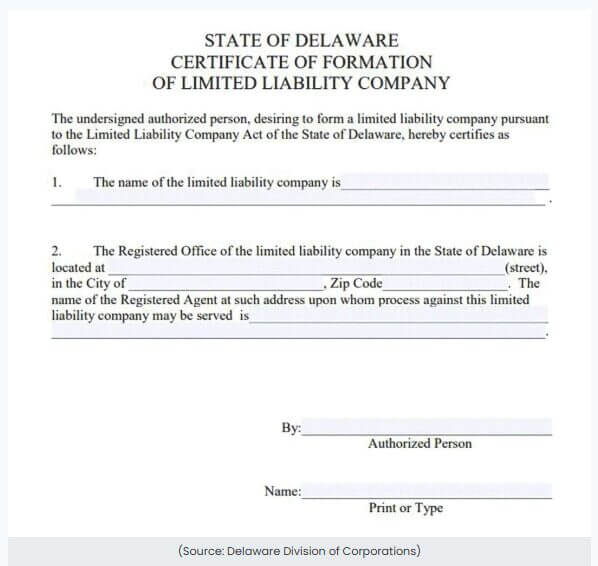
1. Delaware Certificate of Formation
This document proves that your LLC legally exists and is registered with the state of Delaware. Banks rely on it to confirm your business name, formation date, and state of registration; details that must later align with your Amazon Seller Central profile.
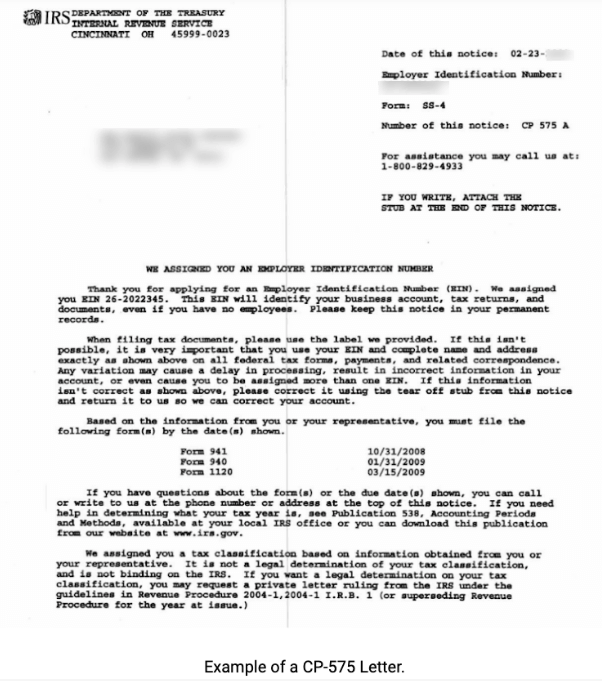
2. EIN Confirmation Letter (CP 575)
Issued by the IRS, this letter (CP575) confirms your Employer Identification Number. Banks use the EIN to identify your business for tax reporting and compliance purposes, and Amazon uses the same EIN during its tax interview to verify your entity.
3. Operating Agreement
While not filed with the state, the operating agreement outlines ownership, management authority, and profit distribution.
Many banks, especially for Amazon sellers, request this document to confirm who is authorized to open and operate the account, even for single-member LLCs.
4. Valid Identification for Owners
Banks require government-issued photo identification for all beneficial owners and authorized signers.
This step helps satisfy anti-money laundering (AML) and know-your-customer (KYC) regulations, which Amazon also enforces indirectly through its verification process.
| For Non-US Amazon FBA Sellers
Non-US founders may qualify for US fintech platforms or approved international banking solutions that Amazon accepts for seller payouts. But the account must be clearly registered in the name of your Delaware LLC and directly linked to your EIN. |
Step 5: Set Up Amazon Seller Central Correctly
Once your LLC and banking are in place, your Amazon Seller Central account must be configured to match your legal structure exactly.
This includes:
- Business name matching your LLC registration
- Correct EIN entry during the tax interview
- Submitting the appropriate tax form: W-9 for US sellers and W-8BEN-E for non-US sellers
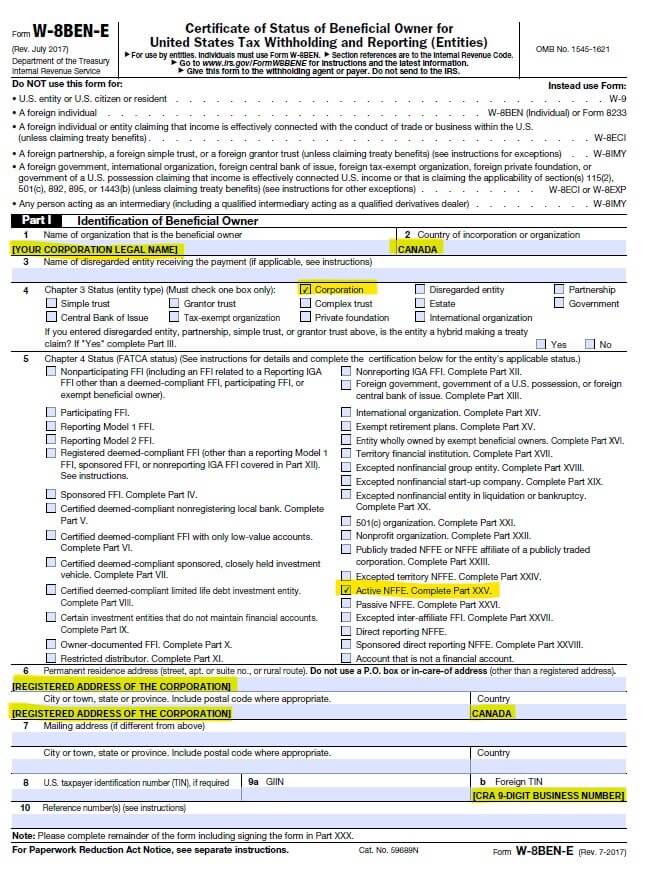
Amazon’s verification process cross-checks entity, tax, and banking information. Even small inconsistencies can trigger review holds or requests for additional documentation.
Step 6: Track Annual Filings and Delaware Franchise Taxes
Forming the LLC is only half the job, maintaining it is just as important.
For Delaware LLCs, you must:
- Pay the annual Delaware franchise tax
- Maintain an active registered agent
- Keep your LLC in good standing with the state
At A Glance: Delaware LLC for Amazon FBA, Formation & Launch Timeline
Step
What Needs to Be Done
Timeframe
Notes for FBA Sellers
Choose LLC Structure
Decide between single-member or multi-member LLC
Same day
Impacts IRS tax treatment and future filings (Schedule C vs. Form 1065)
Register Delaware LLC
File Certificate of Formation with Delaware Division of Corporations
1–3 business days (standard)
Delaware registered agent needed; name must match Amazon account
Receive the Formation Documents
Obtain stamped Certificate of Formation
Same day to 1 week
Required for EIN, banking, and Amazon verification
Apply for EIN (IRS Form SS-4)
Request EIN from the IRS
Instant (US) / 1–4 weeks (non-US)
EIN is mandatory for Amazon tax interview
Open a US Business Bank Account
Set up account in LLC’s name
3–10 business days
Account must be verifiable and linked to LLC
Prepare an Operating Agreement
Draft an internal governance document
1–2 days
Requested by banks, even for single-member LLCs
Set Up Amazon Seller Central
Enter business, tax, and banking details
1–5 business days
All information must exactly match LLC records
Complete Amazon Tax Interview
Submit W-9 or W-8BEN-E
Same day
Errors here can result in account review
Amazon Account Verification
Identity and business verification review
1–14 days
Timing may vary depending on the seller profile and documentation
Pay the Delaware Franchise Tax
Schedule annual compliance
Annually (by June 1)
Required even if business has no revenue
Maintain a Registered Agent
Keep agent active in Delaware
Ongoing
Loss of official agent can jeopardize LLC’s good standing
Missing any of these steps or obligations can result in penalties, loss of good standing, or administrative dissolution. That’s why Amazon sellers choose doola, to handle formation, EIN, banking, and ongoing compliance, without guesswork.
Explore our services and get started today.
How doola Helps Amazon FBA Sellers Get It Right

Forming your LLC in the wrong state can cost you years of unnecessary compliance, duplicated filings, and avoidable fees. That’s exactly why you need doola.
We help Amazon FBA sellers form LLCs in Delaware or any US state, secure their EIN, set up US banking access, and fully understand their sales tax and IRS obligations.
More importantly, doola doesn’t stop at formation. We help sellers stay compliant year after year, long after their Amazon store is live.
This support is especially valuable for non-US founders navigating the US system for the first time, sellers who aren’t sure which state actually makes sense for their situation, and growing Amazon brands that are planning to scale beyond a single marketplace.
If you’re serious about building a compliant, scalable Amazon business, getting the foundation right from day one, doola helps you do exactly that.
Sign up for our services today and speak with an expert who’ll help you choose the right structure, stay compliant, and focus on growing your Amazon brand with confidence.
FAQs

Is a Delaware LLC better than a Wyoming LLC for Amazon FBA?
It depends on your growth plans. Wyoming is simpler and cheaper, with an annual report fee starting at $60. Delaware has a $300 annual franchise tax but is better for scaling and investors.
Can non-US residents form a Delaware LLC for Amazon FBA?
Yes. Non-US founders can legally form and operate a Delaware LLC even without an SSN or residency.
Do I need to register as a foreign LLC if I live outside Delaware?
If you operate or have nexus in another state, yes.
How much does a Delaware LLC cost annually for Amazon sellers?
At a minimum, most Amazon sellers should expect $400–$450 per year to maintain a Delaware LLC. This typically includes a $300 annual franchise tax and $100–$150 for a registered agent.
Does Amazon prefer Delaware LLCs over other states?
No, Amazon has no preference for Delaware LLCs. During seller verification, Amazon focuses on business legitimacy, tax compliance, and banking, not the state where your LLC was formed.
Can I switch my Amazon FBA business to Delaware later?
Yes. Many sellers restructure as they scale.
What happens if I choose the wrong state for my Amazon FBA LLC?
You may face higher costs, double compliance, and unnecessary tax exposure, but it can usually be fixed.
Berita Terkini
Berita Terbaru
Daftar Terbaru
News
Jasa Impor China
Berita Terbaru
Flash News
RuangJP
Pemilu
Berita Terkini
Prediksi Bola
Technology
Otomotif
Berita Terbaru
Teknologi
Berita terkini
Berita Pemilu
Berita Teknologi
Hiburan
master Slote
Berita Terkini
Pendidikan
Resep
Jasa Backlink
Slot gacor terpercaya
Anime Batch

