It took one DMCA notice to take down over 1.45 million blogs offline.
That’s what reportedly happened during the Sever Beach takedown, when a copyrighted Pearson questionnaire triggered a massive removal of education websites.
It’s an extreme example, but it shows just how powerful copyright enforcement can be.
And it raises an important question for entrepreneurs, creators, and digital businesses:
Is your work actually protected the way you think it is?
Many people assume copyright protection begins and ends with creating the work itself. While copyright technically exists upon creation, real legal protection begins with registration.
If you want the ability to enforce your rights, pursue infringement claims, and establish formal ownership, registering your copyright is a critical step.
In this guide, we’ll walk through how to register a copyright in the US. This guide is particularly useful for small business owners, SaaS builders, e-commerce brands, digital creators and agencies, and even international entrepreneurs operating US businesses.
And while protecting your creative work is essential, building a successful business also requires the right legal and operational foundation: from forming your US entity to managing compliance and tax registrations, which is where platforms like doola support entrepreneurs.
What Can (and Cannot) Be Copyrighted in the US
Under US copyright law, protection applies to original works of authorship that are fixed in a tangible medium of expression, meaning the work must be created independently and recorded in a form that can be seen, heard, or reproduced.
In simple terms, if you’ve created something original and documented it in a concrete format, it may qualify for copyright protection.
Eligible Works for Copyright
A wide range of creative and business assets can be registered for copyright protection, including:
- Literary works: Books, blog posts, website copy, whitepapers, newsletters, and scripts
- Software code: Includes application source code and certain structural elements of programs
- Music compositions & sound recordings: Lyrics, melodies, and recorded audio files
- Visual artwork: Illustrations, graphics, digital designs, and logos that contain sufficient artistic expression
- Films and video content: Documentaries, promotional videos, YouTube content, and course recordings
- Architectural works: Original building designs and architectural plans
- Online course materials: Slide decks, lesson scripts, downloadable workbooks, and training modules
- Product photography: Original commercial photographs used in catalogs, online stores, or marketing campaigns
All copyright registrations in the United States are processed through the US Copyright Office, which maintains the official public record of ownership.
Not Eligible for Copyright
While copyright law protects expression, it does not protect ideas or functional concepts. The following categories generally cannot be copyrighted:
- Ideas or concepts: Abstract business ideas or creative concepts that haven’t been expressed in a fixed form.
- Systems, methods, or processes: Operational frameworks, workflows, or business methodologies.
- Slogans or short phrases: Short brand taglines usually fall under trademark protection.
- Facts, raw data, or discoveries: Factual information itself cannot be owned through copyright.
🔖 Related Reading: Can You Have the Same Business Name as Someone Else?
Important Distinction for Digital Businesses
For entrepreneurs building digital products, especially SaaS platforms, the nuances of what copyright does and does not cover is slightly different.
For example:
✔️ Your source code is copyrightable because it is a written creative expression.
✔️ Your UI visual elements, such as icons, graphics, and design layouts (may also qualify as artistic works).
✔️ However, the underlying functionality of your software or algorithm logic is not protected by copyright.
Those functional aspects may instead fall under Patent law, which protects inventions, technical methods, and novel systems.
Do You Need to Register Copyright?
Strictly speaking, no, at least not from a legal standpoint. However:
“Technically protected” won’t hold up in court.
Here’s why US copyright registration is indispensable for serious creators and business owners:
1. You Cannot Sue Without Registration
Without registration, your legal options are extremely limited.
If someone copies your blog content, software code, or course materials, you cannot immediately pursue a formal infringement claim until the work is officially registered with the United States Copyright Office.
2. Statutory Damages & Attorney’s Fees
If you register before infringement (or within 3 months of publication), you may be eligible for:
- Statutory damages (up to $150,000 per work in certain cases)
- Recovery of attorney’s fees
Without registration, you’re limited to actual damages, which are often difficult to prove.
3. Public Record of Ownership
Registration creates an official public record of copyright ownership.
This record helps establish who owns the work, when it was created or published, and who has legal rights to license or enforce it
4. Investor & Partner Credibility
If you’re raising capital, selling digital assets, or licensing content, registered copyrights indicate legitimacy. It shows:
- The business properly protects its creative assets
- Ownership rights are clearly documented
- The company takes intellectual property governance seriously
| 🕓 Timing Strategy: Register Early
Register important works early, not after someone copies you. Once infringement happens, your leverage drops dramatically if you haven’t registered. Early registration ensures that if infringement occurs later, you retain the strongest enforcement options available under US copyright law. |
Step-by-Step: How to Register a Copyright in the US
The US Copyright Office has modernized significantly, most registrations today are completed entirely online, and the process is more straightforward than most business owners anticipate.
Here’s exactly how it works.
Step 1: Determine the Correct Application Type
The US Copyright Office organizes registrations by type of creative work, and selecting the right category ensures your application is reviewed efficiently.
Here are the most common copyright application types:
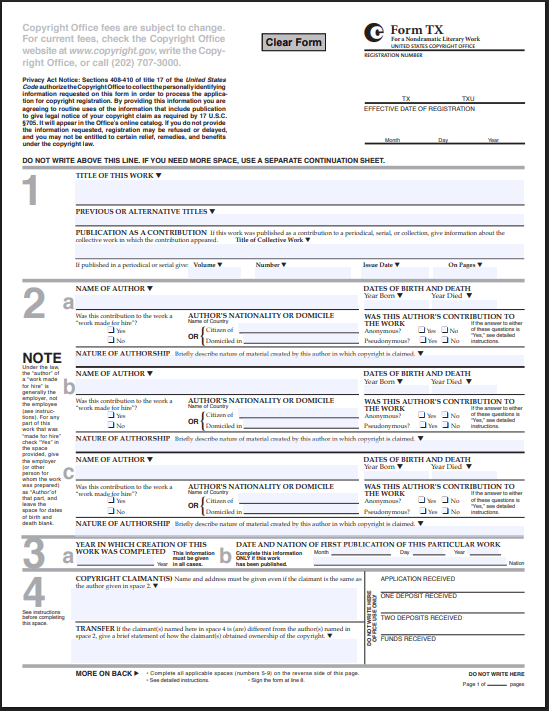
1. Form TX – Literary Works
This category covers written content and text-based works.
Examples include books, blog posts, whitepapers, research papers, marketing copy, and even website content. For entrepreneurs and digital creators, this also includes software code and scripts.
For instance, if you wrote a SaaS platform’s backend code or published an in-depth blog series for your startup, those would typically fall under Form TX.
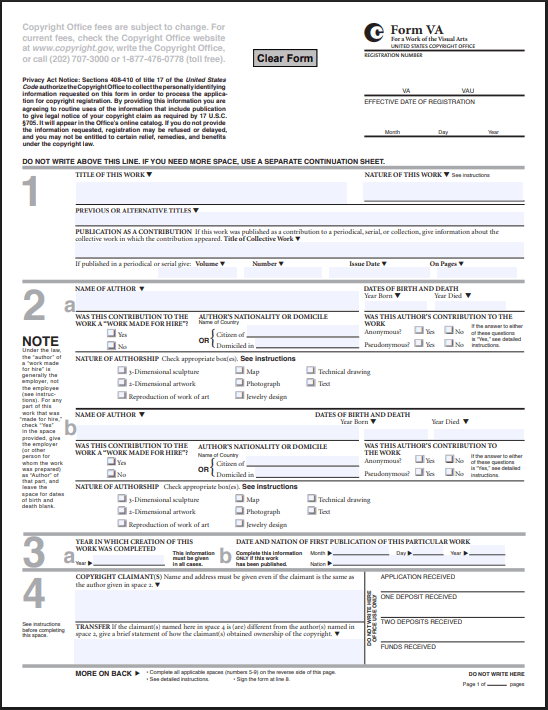
2. Form VA – Visual Arts
The category is used for artistic works that are primarily visual in nature. This includes illustrations, graphic designs, paintings, infographics, digital artwork, product packaging designs, and product photography.
For example, an e-commerce brand might register its original product photography or custom brand illustrations under the VA category by filing Form VA.
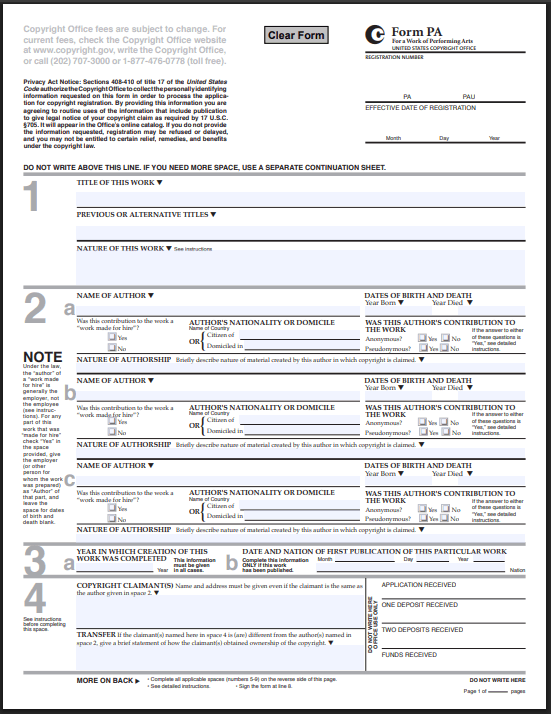
3. Form PA – Performing Arts
This category applies to works intended for performance, such as plays, choreographic works, screenplays, and musical compositions.
For example, a filmmaker registering a movie script or a creator protecting a stage play or choreography routine would typically file under Form PA.
4. Form SR – Sound Recordings

This is used for audio recordings such as music tracks, podcasts, audiobooks, or spoken-word recordings.
For instance, if you produce a podcast series or record an original music track for a digital course or brand campaign, the audio file would generally be registered under Form SR.
In addition to selecting the work category, you’ll also choose the type of application structure:
- Single Application: This simplified option applies when there is one author, one work, and the same person or entity is listed as the claimant (owner).
- Standard Application: This is required when the ownership structure is more complex, for instance, when there are multiple authors, joint creators, or different claimants.
🔖 Related Reading: Protect Your Business: How to Trademark a Brand Name
Step 2: Create an Account in the eCO System
To begin the online registration process, you’ll need to create an account in the Electronic Copyright Office (eCO) system, the official digital portal used by the US Copyright Office for processing copyright applications.
While paper filings are technically still accepted, the vast majority of applicants today use the eCO system because it streamlines the submission process and significantly improves efficiency.
Why file online?
Online filing offers several practical advantages that make the registration process simpler and more efficient:
1. Lower filing fees: The Copyright Office typically charges lower fees for online submissions compared to paper filings, making it a more cost-effective option for creators and small businesses.
2. Faster processing: Applications submitted through the eCO system move through the review queue more quickly than paper applications. Because digital submissions eliminate manual data entry and physical document handling, they tend to reach examiners faster.
3. Easier document uploads: Instead of mailing physical copies, you can upload digital deposit copies directly through the portal. This is particularly convenient for modern creators working with digital assets like PDFs, MP4 videos, MP3 audio files, or software code files.
4. Status tracking: Once your application is submitted, the system allows you to monitor its progress. You can check whether your application is under review, whether correspondence has been issued, or whether the registration has been completed.
Due to these reasons, filing online has become the preferred method for creators, entrepreneurs, and businesses looking for a smoother and faster registration experience.
Step 3: Complete the Copyright Application
Getting started with the copyright application is simple: create your account, verify your email address, log in to the portal, and begin a new copyright claim by selecting the appropriate application type.
From there, the system will guide you through each step of the filing process.
You’ll need to provide the following information to complete your application process:
1. Author Information
This identifies the individual or individuals who created the work.
For example, if you wrote an e-book, developed software code, or designed an illustration yourself, your name would be listed as the author.
If multiple people contributed creatively, such as a developer and a designer working together, each author must be properly listed.
2. Claimant (Owner) Information
The claimant is the legal owner of the copyright. This could be the author or a different entity, such as a company.
For example, if you created a piece of content as part of your startup and assigned ownership to your LLC, the business would be listed as the claimant rather than you personally.
3. Year of Creation
This refers to the year the work was first created, not necessarily when it was published.
For instance, if you wrote a blog post in 2024 but only published it on your website in 2025, the year of creation would still be 2024.
4. Publication Status
You’ll need to specify whether the work has been published or remains unpublished.
In copyright terms, “publication” generally means the work has been distributed to the public, for example, posting an article on your website, releasing a video on a public platform, or selling a digital course.
5. Rights & Permissions Contact
This section identifies the person or entity responsible for handling licensing or usage requests.
For instance, if someone wants permission to republish your article or use your photography, this is the contact information they would use.
Common Mistakes That Cause Rejection
Even though the application process is relatively simple, these small errors can trigger review delays or requests for clarification from the Copyright Office:
| Mistake | Business Impact | How to Prevent |
| Incorrect publication date | Listing the wrong publication status or date can create inconsistencies in the official record and may require additional correspondence with examiners. | Confirm when the work was actually made available to the public, (e.g., the date a blog post went live or a product page was published). |
| Listing yourself as author when it’s a “work made for hire” | If a work was created under a work-for-hire agreement, the company, not the individual creator, may be considered the legal author. Mislabeling this can create ownership conflicts later. | Review contracts carefully and identify whether the work qualifies as a “work made for hire” before listing the author. |
| Omitting co-authors | Omitting contributors can lead to disputes over ownership or incomplete registration records | Ensure every person who contributed original creative input is listed accurately. |
| Mismatching claimant and author information | Incorrect ownership details can cause confusion about who actually controls the rights to the work, especially for businesses. | If a company owns the work, clearly list the company as the claimant while identifying the individuals as authors. |
Take this step seriously. Even small inconsistencies can slow down the review process and lead to back-and-forth communication with examiners.
Step 4: Pay the Copyright Registration Fee
The next step is paying the copyright registration fee.
The fee structure set by the US Copyright Office varies depending on the type of application and the complexity of the work being registered, and includes the following categories:
1. Lower fee for single author / single work (~$45)
If the work has one author, one work, and the same person or entity listed as the claimant, you can typically use the Single Application option. This is the most affordable route and commonly used by those registering a single piece of work.
2. Higher fee for standard applications (~$65)
If the work involves multiple authors, shared ownership, or more complex claimant structures, you’ll need to file a Standard Application.
For example, a startup registering software developed by several engineers or a collaborative creative project would fall under this category.
3. Group registration options ($55-$85)
The Copyright Office also offers group registrations, allowing creators to protect multiple works under a single application in specific situations.
This option is especially useful for photographers, content creators, or publishers who produce multiple works within a defined time period.
To provide a clearer overview, here are some of the most common registration fees when filing online through the eCO system:
| Application Type | Typical Fee (USD) | When It Applies |
| Single Application | $45 | One author, one work, same claimant |
| Standard Application | $65 | Multiple authors or different claimant |
| Group Registration for Photographs | $55 | Multiple photos created by the same photographer |
| Group Registration for Unpublished Works | $85 | Up to 10 unpublished works by the same author |
| Paper Filing (rare cases) | $125 | Physical application mailed to the office |
All fees must be paid during the submission process and can typically be completed through secure online payment options in the eCO portal.
Step 5: Submit Your Deposit Copy
The next step is submitting your deposit copy, a copy of the work you’re asking the US Copyright Office to register. This deposit serves as the official reference version of the work and becomes part of the Copyright Office’s records.
In most cases today, deposit copies are submitted digitally through the Electronic Copyright Office (eCO) system, making the process quick and convenient for modern creators and digital businesses.
Common File Formats
The format you upload should match the type of work you are registering. Some common examples include:
- PDF (books, blog posts, scripts, software code): PDFs are commonly used for literary works such as e-books, articles, whitepapers, and website content.
- MP3 or WAV (audio works): Audio-based works such as music tracks, podcasts, or spoken-word recordings are usually submitted as MP3 or WAV files.
- MP4 (video content): Video creators can submit MP4 files when registering films, educational videos, YouTube content, or digital course modules. This ensures the visual and audio elements of the work are preserved together in the deposit.
- JPEG or PNG (visual artwork): Visual works such as illustrations, graphic designs, digital art, or product photography are typically submitted as image files like JPEG or PNG.
| 📌 When Physical Copies May Be Required
Although rare today, certain types of works, particularly traditionally published books or materials already distributed in physical form, may require physical deposit copies to be mailed to the Copyright Office. |
Best Practices Before Uploading
Submitting the correct deposit copy is essential because it becomes the official representation of your registered work. Before uploading your files, keep these best practices in mind:
1. Ensure the file represents the final version of the work: Upload the completed version that you want legally protected. For example, if you’re registering a digital course script or e-book, make sure it reflects the finalized content rather than an early draft.
2. Double-check file readability and formatting: Confirm that the file opens properly and is clearly legible. Corrupted files, incomplete uploads, or unreadable formats can delay processing and may require resubmission.
3. Match the uploaded work to the application description: The deposit copy should correspond exactly to the information you entered in the application. If the application says you’re registering a specific article, design, or software module, the uploaded file should reflect that exact work.
Step 6: Wait for Review & Monitor Status
After submitting your application, fee, and deposit copy, the final step is waiting for the review process to be completed by the Copyright Office.
During this stage, an examiner reviews your submission to confirm that the work qualifies for copyright protection and that the application information is complete and accurate.
| 🕓 How long does copyright registration take?
Applications filed online through the eCO system typically take about 2–4 months, while paper filings can take 8–13 months due to manual processing and longer review queues. |
During the review process, your application may result in one of the following outcomes:
1. Approval Certificate
If everything in the application is accurate and the work meets copyright eligibility requirements, the Copyright Office will issue a Certificate of Registration.
This document serves as official proof of copyright ownership and can be used in licensing deals, enforcement actions, or legal proceedings.

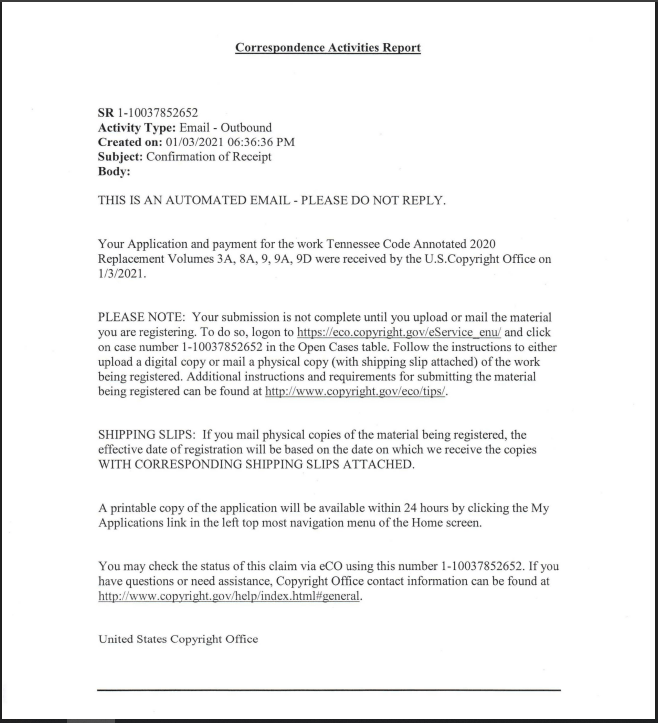
2. Correspondence (Request for Clarification)
In some cases, an examiner may reach out with questions or request additional information, for example, clarification about authorship, publication status, or ownership details.
This is fairly common and does not necessarily mean there is a major problem with the application.
3. Refusal Notice
In rare cases, an application may be refused if the work does not meet copyright eligibility requirements or if the submission contains significant errors.
Most refusals can be avoided by ensuring the application details are accurate and the correct work category is selected.
| 📌 Important: If you receive correspondence from the Copyright Office, it’s important to respond promptly and provide the requested clarification. |
Copyright Registration Timeline & What to Expect
The review period at the Copyright Office can vary depending on several factors, including application volume, the complexity of the claim, and whether the examiner needs clarification on any details.
Current Processing Times (Online vs. Paper)
| Filing Method | Typical Processing Time |
| Online Filing (eCO system) | ~3–8 months (average) |
| Online Filing (with correspondence) | ~6–10 months |
| Paper Filing | ~8–13 months (sometimes longer) |
| Complex Claims / Special Cases | Can exceed 12 months |
Additionally, here are a few things to keep in mind:
1. Your effective registration date is tied to submission, not approval
Your effective registration date is usually the date the Copyright Office receives your complete submission, meaning the application form, filing fee, and deposit copy have all been successfully submitted.
This date becomes part of the official record and can be important if you ever need to demonstrate when your claim to the work began.
2. Certain rights can be exercised even while the application is pending
You don’t necessarily need to wait until the certificate arrives to begin asserting certain rights.
In some cases, you can even initiate enforcement actions while the registration is still under review.
Once your application has been filed, you may be able to reference the work as “copyright registration pending” in contracts, licensing agreements, or legal notices.
3. Keep confirmation receipts and tracking records
After submission, the eCO system will generate confirmation emails and receipts for your application and payment.
These records serve as proof that your filing was completed and can be useful if you need to demonstrate the timing of your claim, for example, when negotiating licensing agreements or responding to potential infringement.
4. Register early if your work has “business value”
Creators and entrepreneurs should aim to register important works before they become commercially valuable or widely distributed.
If you anticipate licensing your content, launching a digital product, partnering with brands, or raising investment capital, having copyright registrations already in place can prevent last-minute delays and strengthen your legal position.
Common Mistakes That Delay Copyright Approval
Even though the copyright registration process is relatively straightforward, small inaccuracies in the application can lead to delays, clarification requests, or additional review by examiners at the US Copyright Office.
Reviewing the following checklist before submission can help ensure your application moves through the review process smoothly.
| Mistake | Business Impact | How to Prevent |
| Incorrect publication status | Mislabeling any work as “published” or “unpublished” can always trigger examiner correspondence and slow down processing. | Verify whether the work has been made publicly available, for example, posted on a website, sold online, or distributed publicly. |
| Missing / incomplete author listing | Failing to list all contributors can lead to ownership disputes or requests for clarification during review. | Ensure every individual who contributed original creative content (co-writer, designer, developer) is properly listed. |
| Improper ownership structure | If the claimant (owner) information does not match the authorship or contractual agreements, it can create legal ambiguity about who actually owns the rights. | Confirm whether the copyright should be owned by the individual creator or by a company (such as an LLC) before filing. |
| Incorrect or mismatched deposit file uploaded | Uploading the wrong file or an incomplete version may require resubmission and additional correspondence. | Double-check that the uploaded file is the final version and matches the work described in the application. |
| “Work Made for Hire” not properly disclosed | Misidentifying authorship when work was created under employment or contractor agreements can create legal conflicts later. | Review contracts carefully and clearly indicate if the work qualifies as a work made for hire. |
| Derivative work not clearly explained | If the work is based on or adapted from an earlier work (such as an updated edition or modified design), the examiner may request clarification. | Clearly identify the preexisting material and explain what new creative elements are being claimed. |
In many cases, a single overlooked field or inconsistency can add weeks or even months to the approval timeline, so careful preparation before submission is well worth the effort.
Special Situations: What Business Owners Should Know
Copyright registration isn’t just a concern for artists, authors, or musicians.
For modern businesses, especially digital-first companies, copyright often protects some of the most valuable assets in the company’s ecosystem.
Below are a few scenarios where business owners should think about copyright protection.
Copyright for Business Owners
If you run a company, it’s worth evaluating which assets represent original creative works that deserve formal copyright protection.
Some of the most common examples include:
1. Website content
Your website often contains a significant amount of original writing: product descriptions, blog articles, landing pages, and guides.
Registering key content assets can help prevent competitors from copying or republishing them.
2. Product photography
E-commerce brands frequently invest in professional photoshoots to showcase their products. These images are original creative works and can be registered for copyright protection.
For instance, a fashion brand’s unique product images or styled lifestyle shots used across product pages and social media campaigns are typically eligible.
3. Ad creatives
Marketing campaigns often involve custom-designed graphics, illustrations, video ads, and branded visual storytelling.
If your company develops distinctive ad creatives for digital marketing, such as social media graphics, promotional videos, or animated ads, those assets may qualify for copyright protection as well.
4. Digital courses and educational materials
Many entrepreneurs monetize expertise through online courses, training programs, and downloadable learning resources.
These materials, such as course videos, slide decks, workbooks, and lesson scripts, are considered original works and can be registered to prevent unauthorized copying or redistribution.
5. Software and SaaS code
For technology companies, source code is one of the most important copyrightable assets.
While software functionality itself may not be protected by copyright, the actual code written by developers is. Registering portions of your software codebase can help establish clear ownership and strengthen IP protection for your product.
For companies building digital products or content-driven brands, copyright registration can become a valuable part of the broader strategy to protect intellectual property in the US.
Ownership & Freelancer Issues
One of the most common copyright pitfalls for small businesses involves work created by freelancers, contractors, or external agencies.
If you’ve hired someone to create content, design assets, or software for your company, consider the following questions:
1. Did you sign a proper contract?
Without a written agreement, the default rule under copyright law is that the creator owns the work, even if you paid them to produce it.
For example, if a freelance designer creates your logo or website graphics without a contract specifying ownership transfer, they may technically retain the copyright.
2. Does the agreement include “Work Made for Hire” language?
A properly structured contract often includes a Work Made for Hire clause, which specifies that the work created belongs to the hiring company from the moment it is produced. This language is commonly used for things like design projects, marketing assets, or commissioned content.
3. Does ownership transfer to your company?
In cases where “Work Made for Hire” may not apply, the contract should still include an explicit assignment of copyright ownership to your business.
For instance, if a developer builds custom software features for your platform, the agreement should transfer the rights to your company.
Without clear agreements in place, the freelancer or contractor may legally remain the copyright owner, even if the work was created specifically for your business.
This is a situation where many entrepreneurs often run into problems during due diligence for fundraising, partnerships, or acquisitions.
Investors and potential buyers often review intellectual property ownership closely, and unclear ownership structures can quickly raise red flags.
How to Enforce Your Copyright After Registration
Once your copyright is registered, several enforcement options become available, ranging from informal resolution to formal legal action.
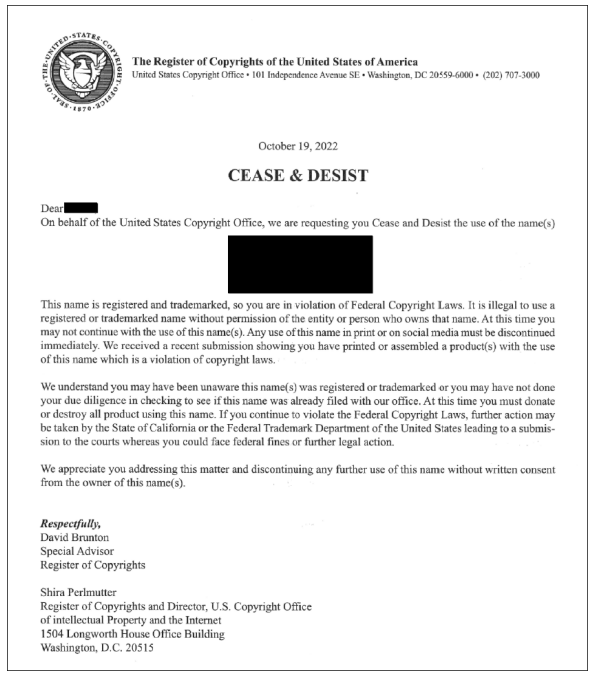
1. Sending cease and desist letters
One of the most common first steps is issuing a cease and desist letter to the infringing party. This formal notice informs them that the work is protected by copyright and demands that they stop using it immediately.
For example, if another website republishes your blog article or copies your product images, a cease and desist letter can often resolve the issue quickly without escalating into litigation.
3. Filing DMCA takedown notices
If your content appears online “without authorization”, you can file a DMCA takedown notice with the platform hosting the content, such as a website host, marketplace, or social media platform.
These notices request that the platform remove the infringing material.
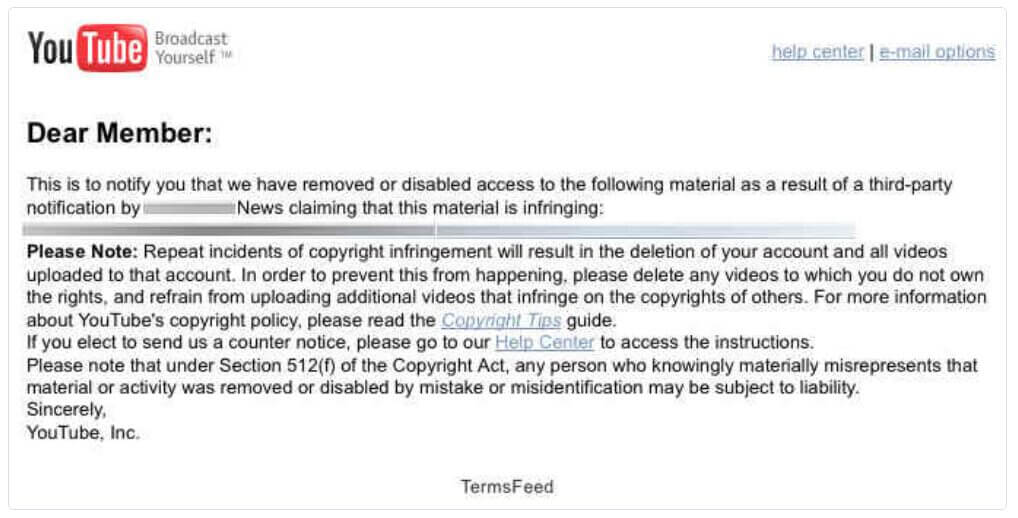
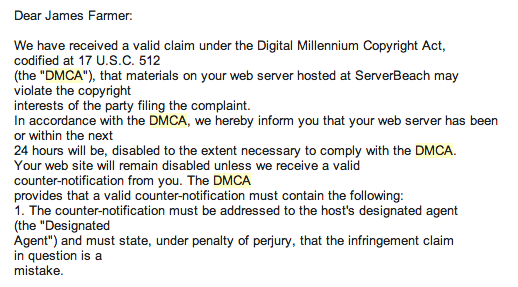
Shown right here is the case of web hosting firm Sever Beach where just one DMCA notice took down nearly 1.45 million education blogs over a 20-item questionnaire copyrighted by Pearson.
4. Suing in federal court
When infringement causes significant financial harm or the infringing party refuses to comply with requests to stop, you may choose to file a lawsuit in federal court.
Copyright registration is typically a prerequisite for bringing such cases, and having an official certificate strengthens your legal claim.
5. Seeking statutory damages
Registered copyright holders may be eligible to seek statutory damages, which allow courts to award financial compensation even if precise losses are difficult to calculate.
In some cases, especially where infringement is proven to be willful, these damages can be substantial.
In more complex situations, creators and businesses often work with intellectual property attorneys to escalate enforcement strategies, negotiate settlements, or pursue litigation when necessary.
How doola Helps Entrepreneurs Protect Their Businesses

Behind every protected piece of intellectual property is a business that owns it.
And for most business owners, that means navigating critical early steps like forming a company, structuring ownership, and staying compliant as the business grows.
At doola, we help entrepreneurs handle the operational side of building a company, including:
- Forming a legal US business entity
- Managing compliance and annual filings
- Handling tax registrations all year long
- Structuring business ownership properly
Because protecting your intellectual property is only part of the equation. The real advantage comes from building a company structure that can support, protect, and scale those assets over time.
And with doola, you’re not just launching a company, you’re building a global-ready business designed for growth.
Sign up for our services and start building your foundation today.
FAQs

Do I need to register copyright if my work is already protected automatically?
Yes, copyright protection technically exists the moment your work is created and fixed in a tangible form.
Registration with the United States Copyright Office allows you to file an infringement lawsuit in federal court and unlocks potential statutory damages and recovery of attorney’s fees, remedies that are unavailable without registration.
How much does it cost to register a copyright in the US?
It depends on the type of application: $45 for a single application, $65 for a standard application, $55 for group photographs, $85 for group unpublished works, and $125 for paper filings.
How long does copyright registration take in 2025?
Copyright registration takes about 2–4 months for online applications filed through the eCO system and 8–13 months for paper filings.
Can I register multiple works under one copyright application?
In most cases, each work requires its own copyright registration.
However, the Copyright Office allows group registrations for certain categories, such as photographs, unpublished works, or multiple blog posts created by the same author within a specific timeframe.
What happens if someone infringes before I register?
You can still register your work after discovering infringement and pursue legal action.
However, if registration occurs after the infringement begins, you may lose eligibility for statutory damages and attorney’s fees.
Can non-US residents register a copyright in the US?
Yes, the US copyright system is open to international creators, and non-US residents can register their works with the United States Copyright Office.
Should my copyright be owned by me personally or by my LLC?
For many businesses, assigning copyright ownership to the company, rather than the individual creator, creates a cleaner legal structure.
When the LLC owns the intellectual property, it simplifies licensing, fundraising, partnerships, and potential acquisitions, while also helping separate personal and business liability.
PakarPBN
A Private Blog Network (PBN) is a collection of websites that are controlled by a single individual or organization and used primarily to build backlinks to a “money site” in order to influence its ranking in search engines such as Google. The core idea behind a PBN is based on the importance of backlinks in Google’s ranking algorithm. Since Google views backlinks as signals of authority and trust, some website owners attempt to artificially create these signals through a controlled network of sites.
In a typical PBN setup, the owner acquires expired or aged domains that already have existing authority, backlinks, and history. These domains are rebuilt with new content and hosted separately, often using different IP addresses, hosting providers, themes, and ownership details to make them appear unrelated. Within the content published on these sites, links are strategically placed that point to the main website the owner wants to rank higher. By doing this, the owner attempts to pass link equity (also known as “link juice”) from the PBN sites to the target website.
The purpose of a PBN is to give the impression that the target website is naturally earning links from multiple independent sources. If done effectively, this can temporarily improve keyword rankings, increase organic visibility, and drive more traffic from search results.