
Learn practical swing trading strategies for investment: understanding, how it works, differences with scalping, risks & starting tips for beginners.
In the midst of increasingly dynamic stock and crypto market fluctuations, there are many investors Retailers are starting to look at swing trading as a strategy to look for short-medium term profit opportunities. This strategy is often considered the “middle ground” between intense daily trading and long-term investing that requires extra patience.
But actually, what is swing trading like? Is this investment strategy suitable if you still work in an office or are just starting to learn trading?
Also read: How to Trade Crypto for Beginners: Complete Guide Starting from Zero
What is Swing Trading?
In simple terms, swing trading is a trading strategy that utilizes price movements (swings) over several days to several weeks. Traders don’t need to monitor the charts every minute, but still actively monitor market trends and momentum.
In swing trading, the main goal is to buy an asset when the price is in a potential area of increase, then sell it when the profit target is reached, without having to wait years like long-term investors.
This strategy is commonly used in:
- Share
- crypto
- Forex
- Index
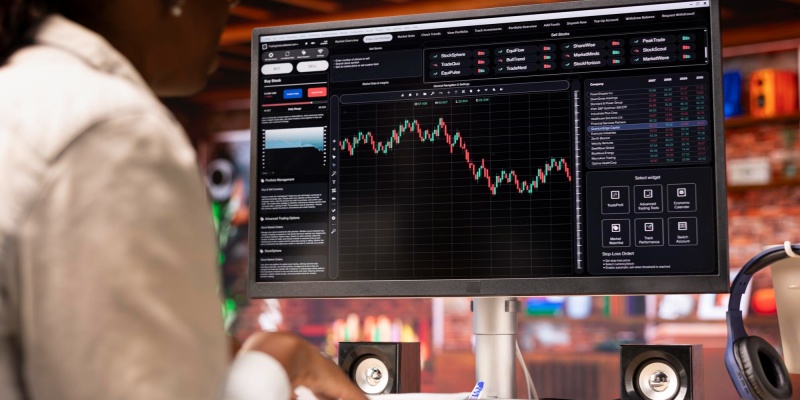
How Swing Trading Works
So, how does the swing trading strategy work? This investment strategy is carried out in a fairly systematic manner. Not just “market feeling”, but a combination of analysis and discipline.
1. Analyze price trends
The first step in swing trading is to read the market direction. Traders identify whether prices are in an uptrend, downtrend or moving sideways.
To help, technical indicators such as:
- Moving Average (MA) to see the direction of the main trend
- RSI to measure overbought or oversold conditions
- MACD to read the momentum of trend changes
The goal is simple: go with the flow, not against the market.
2. Determine the entry point
Once the trend is clear, traders look for relatively safe entry moments. Entries are usually made when the price experiences a mild correction (pullback), but is still in the direction of the main trend.
In this phase, patience is important. In swing trading, waiting for the ideal setup is often more profitable than entering positions too often.
3. Set profit and cut loss targets
This is the crucial part. Before opening a position, traders have determined:
- Profit targets: where profits will be realized
- Cut losses: maximum loss limit if the market moves in the opposite direction
In principle, the risk must be smaller than the potential profit. In the world of swing trading, discipline in carrying out a plan is much more important than feeling or excessive speculation.
4. Waiting for momentum
After the position is opened, traders just need to monitor price developments. Positions are usually held for several days to several weeks, until the target is reached or a trend reversal signal appears.
This approach makes swing trading feel more relaxed than day trading, but still requires careful planning and good emotional control.
Also read: Definition and Understanding of All-Time High (ATH) in Investment
Advantages of Swing Trading
Why is this strategy quite popular? These are some of the advantages of swing trading so that it is often the investment strategy of choice:
1. More flexible time
You don’t need to monitor the chart from morning to evening. Just check the market periodically, for example in the morning or evening. Suitable for office workers, freelancers, or if you still have other main activities.
2. Potential for greater profits per transaction
Because it takes advantage of longer price movements, swing trading profit targets are usually wider than daily trading. Once in position, the results can feel more significant.
3. Mentally calmer
Less transaction frequency means relatively lower emotional stress. You are not forced to make quick decisions every minute, so you are more rational in your actions.
4. Can be combined with investment
Many investors use swing trading as a complement to a long-term investment strategy. Some of the funds are invested, the other part is used to capture short-medium term opportunities.

Risks to Understand
Even though swing trading sounds interesting and is relatively flexible, there are still risks to this investment strategy. Understanding these risks actually helps you survive longer in the market.
1. Risk of price gaps due to news or market sentiment
Prices can jump or fall sharply when the market opens due to economic news releases, issuer performance reports, or global sentiment. In swing trading, this condition can cause the price to immediately “jump” past the cut loss area or target that has been set.
2. False breakout
Not all technical signals lead to further movement. Sometimes prices seem to break through resistance or support, but it turns out it’s just a market trap. False breakouts like this are quite common and can trigger losses if traders enter positions too aggressively.
3. Overconfidence after several profits
This swing trading risk is often not felt. After several successful transactions, traders can feel like they are “good at it”, then start to ignore their own rules, for example widening cut losses or entering without thorough analysis. In swing trading, consistency is much more important than momentary euphoria.
As an illustration, data from Indonesian Stock Exchange (IDX) shows that many retail investors suffer losses not because their strategy is wrong, but because they lack discipline in risk management and emotional control.

Tips for Starting Swing Trading for Beginners
If you are interested in trying swing trading, these tips can be a starting point:
- Start from safe capital
Use cold funds. It’s okay to start small, as long as it’s done consistently and in control. - Focus on liquid assets
Choose stocks or assets with high transaction volume so that it is easy to enter and exit positions. - Use a trading journal
Note the reasons for entry, exit, and results. This helps with evaluation as well as reduces repeat errors. - Don’t ignore your personal financial condition
Trading will feel much calmer if cash flow and your financial obligations are in order.
At this point, you can take advantage of the features Financial management from the application score life For:
- Get recommendations for payment of arrears
- Set a budget so that trading funds do not interfere with main needs
Also read: Investing for Beginners: Where to Start? This is the Initial Guide
Swing Trading vs Long Term Investing
It’s important to remember, swing trading is not a replacement long term investment. Both have different goals and approaches.
- Swing trading
Focus on exploiting short-to-medium term price momentum, targeting profit from market fluctuations. - Long term investment
Focus on gradual growth in asset value, usually taking into account company fundamentals and a multi-year time horizon.
Many people choose to combine the two: some funds are managed for long-term investments, others are used for swing trading. As long as financial conditions are healthy, cash flow is secure, and goals are clear, this combination can complement each other, not interfere with each other.

The Importance of Financial Health Before Trading
One thing that novice traders often forget: credit conditions and personal financial obligations. Before getting serious about swing trading, it’s a good idea for you to:
You can do all this easily through score life. With clear and controlled financial conditions, trading decisions become more rational, not emotional.
Also read: Understanding the Differences between Forex and Crypto and Their Comparison
Conclusion
Swing trading can be an attractive investment strategy for those of you who want to be active in the market without having to trade full-time. The key is discipline, risk management and overall financial preparedness.
As long as you understand the strategy, maintain cash flow, and ensure your personal financial condition remains healthy, you can try this investment strategy slowly. Trading can be aggressive, but finances must still be realistic.
FAQ About Swing Trading
- What is meant by swing trading?
Swing trading is a trading strategy that aims to take advantage of price movements (swings) over a period of several days to several weeks. Traders buy assets when the price has the potential to rise, then sell them when the profit target is reached, without having to monitor the market at all times like day trading.
- What is the difference between scalping and swing trading?
The main difference is in the time period and transaction intensity. Scalping is a very fast transaction (a matter of minutes), high frequency, and requires full focus throughout market hours. Meanwhile, swing trading means positions are held longer (days-weeks), lower frequency, and more flexible for those who have other activities.
- How long does swing trading usually last?
The duration of swing trading generally ranges from 2 days to several weeks, depending on market conditions and the trader’s targets. As long as the momentum is still in the direction of the initial analysis, the position can be maintained.
- How does swing trading work?
The way swing trading works starts from analyzing price trends using technical indicators, then determining the entry point, profit target and loss limit (cut loss). After the position is opened, the trader waits for price momentum until the target is reached or the signal changes.
- Is swing trading suitable for beginners?
Suitable, as long as it starts with a disciplined approach. Swing trading is relatively calmer than scalping, but still requires an understanding of risk management and a healthy personal financial condition. Beginners are strongly advised to start with small capital and a clear plan.
News
Berita Teknologi
Berita Olahraga
Sports news
sports
Motivation
football prediction
technology
Berita Technologi
Berita Terkini
Tempat Wisata
News Flash
Football
Gaming
Game News
Gamers
Jasa Artikel
Jasa Backlink
Agen234
Agen234
Agen234
Resep
Cek Ongkir Cargo
Download Film


